
Getting a dental crown placed should solve a problem, not create a new one. So when a crowned tooth starts hurting, it can feel confusing and frustrating. You went through the procedure, you followed the instructions, and now something doesn’t feel right.
The good news is that pain or discomfort after a crown is placed is more common than most patients realize, and in most cases, there is a clear, treatable cause. Understanding what is behind the discomfort is the first step toward fixing it.
Some causes are minor and resolve on their own within a few days. Others need attention from your dentist sooner rather than later. Knowing the difference matters.
Whether you are dealing with sensitivity after a recent procedure or discomfort that has developed in a crown placed months or years ago, patients who have had a dental crown in Agoura Hills and are experiencing pain will find a clear breakdown of the most common causes and what to do about each one right here.
Cause One: Normal Post-Procedure Sensitivity
The most common and least concerning cause of crown discomfort is normal sensitivity in the days immediately following placement.
When a tooth is prepared for a crown, the dentist removes a layer of tooth structure from all surfaces of the tooth. This preparation can leave the tooth temporarily more sensitive than usual, particularly to temperature changes. Cold drinks, hot food, or even breathing cold air can trigger mild discomfort in the first week or two after a crown is placed.
This type of sensitivity is normal and expected. It typically fades on its own as the tooth settles. Using a sensitivity toothpaste during this period can help manage the discomfort.
If sensitivity is improving day by day, that is a good sign. If it is getting worse rather than better after the first week, that is worth mentioning to your dentist.
Cause Two: The Crown Is Too High
This is one of the most common causes of crown discomfort and also one of the easiest to fix.
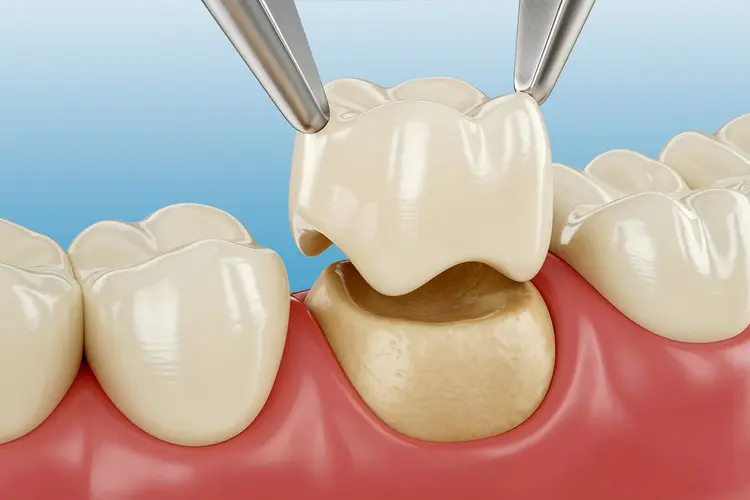
When a crown is placed, it needs to fit precisely into the patient’s bite. If the crown is even slightly too high, it receives more biting force than it should every time the teeth come together. This excess pressure creates soreness in the tooth and the surrounding jaw that can range from mild to quite significant.
The telltale sign of a high crown is that the discomfort is most noticeable when you bite down. Your bite may feel uneven or you may notice that the crowned tooth makes contact before your other teeth do.
The solution is a simple adjustment. Your dentist removes a small amount of material from the biting surface of the crown until it sits correctly in your bite. This usually takes only a few minutes and provides immediate relief. Do not put off this appointment. A crown that is consistently hitting too hard can eventually cause the tooth beneath it to become inflamed or infected.
Cause Three: Gum Irritation Around the Crown
The gum tissue directly around a newly placed crown sometimes becomes irritated during the placement process. This can cause soreness, swelling, and sensitivity in the gum area surrounding the crown rather than in the tooth itself.
Mild gum irritation after crown placement is normal and usually resolves within one to two weeks. Gentle brushing, warm salt water rinses, and avoiding very hard or chewy foods in that area can help the tissue heal comfortably.
If gum soreness is persisting beyond two weeks or is accompanied by significant swelling or bleeding, it is worth having your dentist take a look to rule out an issue with the crown margin or the fit of the restoration at the gum line.
Cause Four: The Tooth Needs a Root Canal
This is the cause patients least want to hear but one that is important to understand.
Sometimes a tooth that has been crowned was already compromised internally before the crown was placed. The crown protects the outer structure of the tooth but cannot prevent the nerve inside from becoming inflamed or infected if the underlying pulp tissue has been damaged by deep decay, a crack, or previous dental work that disturbed the nerve. Signs that a crowned tooth may need root canal treatment include:
- A deep, throbbing ache that is present even without biting or temperature triggers
- Sensitivity to hot that lingers for more than a few seconds after the stimulus is removed
- Swelling or a small pimple-like bump on the gum near the crowned tooth
- Pain that wakes you up at night or is severe enough to interfere with daily activities
If you are experiencing any of these symptoms in a crowned tooth, contact your dentist promptly. An infected tooth does not resolve on its own. The infection can spread to the surrounding bone and tissue if left untreated.
The crown itself can often be preserved after root canal treatment. In some cases the root canal can be performed through the existing crown without needing to remove it.
Cause Five: A Cracked Tooth Under the Crown
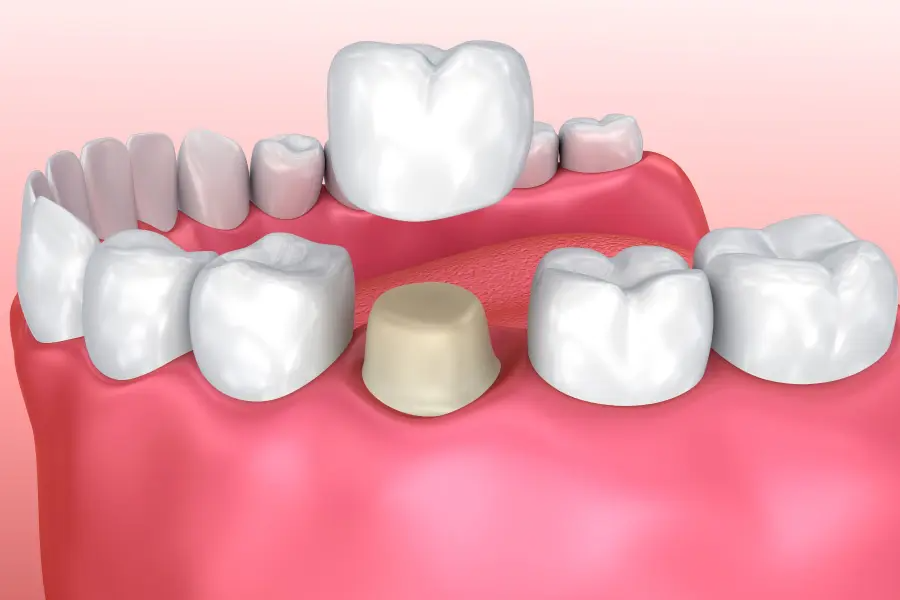
A crown covers and protects the visible portion of a tooth, but it does not always prevent the tooth root beneath from developing a crack. Cracks can develop in crowned teeth from grinding, trauma, biting on something unexpectedly hard, or the natural stresses of long-term function.
A cracked tooth under a crown produces a very specific type of pain: sharp discomfort when biting down in a particular spot, often combined with sensitivity that lingers after biting. The pain may come and go rather than being constant.
Diagnosing a crack under an existing crown can be challenging because the crown obscures the view of the underlying tooth. Your dentist may use bite tests, dye, or cone beam imaging to identify the location and extent of the crack.
The treatment depends on how far the crack extends. Cracks that are confined to the crown portion of the tooth can sometimes be managed with a new crown or other restoration. Cracks that extend below the gum line into the root may mean the tooth cannot be saved. In those cases, extraction followed by a dental implant is often the most appropriate long-term solution.
Cause Six: Cement Leakage or Crown Loosening
Over time the cement that holds a crown in place can break down, allowing bacteria to enter the space between the crown and the prepared tooth beneath it. This creates sensitivity and discomfort as the unprotected tooth structure becomes exposed to temperature changes and oral bacteria.
A loose crown may feel slightly mobile when you bite down, or you may notice a change in how it feels when your tongue passes over it. You might also notice a bad taste coming from that area, which can indicate that bacteria have gotten beneath the crown.
A loose or leaking crown needs to be addressed promptly. Your dentist will remove the old crown, clean the tooth surface underneath, and either re-cement the original crown if it is still in good condition or fabricate a new one.

Crown pain always has a cause and almost always has a solution. The sooner you identify what is happening, the simpler the fix tends to be. Agoura Advanced Dentistry serves patients across Agoura Hills, Calabasas, Westlake Village, Thousand Oaks, Oak Park, Hidden Hills, Newbury Park, Bell Canyon, and Lake Sherwood.
Cause Seven: Bruxism and Grinding
Patients who grind or clench their teeth, a condition known as bruxism, place significantly more stress on their crowns than the average patient. This excessive force can cause soreness in the crowned tooth, in the surrounding jaw muscles, and in the temporomandibular joint over time.
If you wake up with jaw soreness, have headaches in the morning, or notice your teeth feeling generally tired and achy, bruxism may be contributing to your crown discomfort.
A custom nightguard is one of the most effective ways to protect crowns and natural teeth from the effects of grinding. It creates a protective barrier between the upper and lower teeth during sleep, absorbing the forces that would otherwise be transmitted directly into the crowns and surrounding structures.
For patients in Agoura Hills, Calabasas, Westlake Village, Thousand Oaks, Oak Park, Hidden Hills, Newbury Park, Bell Canyon, and Lake Sherwood dealing with crown discomfort alongside jaw pain or morning headaches, discussing a nightguard with your dentist is a worthwhile conversation.
When to Call Your Dentist
Most crown discomfort has a clear cause and a straightforward solution. But knowing when to call promptly rather than waiting to see if things improve is important.
Call your dentist sooner rather than later if:
- Pain is severe, throbbing, or constant
- You have swelling in the gum or jaw near the crowned tooth
- You have a fever alongside dental pain
- The crown feels loose or has come off
- Sensitivity to hot persists for more than a few seconds
- Pain is getting worse rather than better over several days
FAQs
Is it normal for a crown to hurt after placement?
Mild sensitivity in the first one to two weeks after placement is normal. Pain that is worsening, severe, or accompanied by swelling should be evaluated by your dentist promptly.
How do I know if my crown is too high?
If you notice discomfort specifically when biting down, or if your bite feels uneven with the crowned tooth making contact before your other teeth, the crown may be too high and needs a simple adjustment.
Can a crowned tooth get infected?
Yes. The crown protects the outer tooth structure but the nerve and pulp tissue inside the tooth can still become infected. Signs include throbbing pain, sensitivity to heat, and swelling near the tooth.
How long should crown sensitivity last?
Normal post-procedure sensitivity typically improves within one to two weeks. Sensitivity that persists beyond this period or is getting worse rather than better should be evaluated.
What should I do if my crown falls off?
Call your dentist as soon as possible. Keep the crown if you can and avoid eating on that side. Do not attempt to re-cement the crown yourself with over-the-counter materials without speaking to your dentist first.